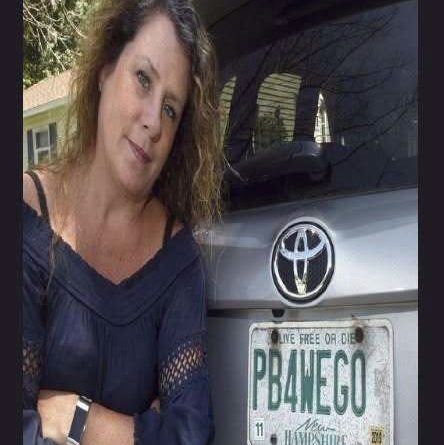
THE STATE CALLED HER LICENSE PLATE INAPPROPRIATE AFTER 15 YEARS, BUT THIS MOM FOUGHT BACK AND WON
For more than fifteen years, Wendy Auger of Rochester, New Hampshire, drove around with a small piece of humor attached to the back of her car. Her vanity license plate, “PB4WEGO,” was not meant to make a political statement or cause controversy. It was simply a playful reminder of something nearly every parent has said before leaving the house with children: “Pee before we go.” To Wendy, the phrase represented family life, road trips, and the everyday chaos of raising four children. Over the years, the plate became a familiar joke that brought smiles from strangers and started conversations wherever she traveled.
That harmless joke suddenly became the center of an unexpected battle when Wendy received a letter from the New Hampshire Division of Motor Vehicles ordering her to surrender the plate. After years of approval, state officials had decided the combination of letters and numbers was inappropriate because they interpreted it as referring to “sexual or excretory acts or functions.” Wendy was shocked that a phrase associated with parenting and childhood memories had been classified as offensive. She had driven for over a decade without a single issue, only to discover that a government review had reinterpreted her innocent message years later.
The decision felt especially ironic in a state known for its motto, “Live Free or Die.” Wendy, who described herself as a regular person rather than an activist, questioned how a simple family joke could be considered a threat to public standards. She explained that “PB4WEGO” represented a common phrase heard in households everywhere, especially before long drives or family vacations. To her, the issue was not just about a license plate—it was about whether harmless humor should be controlled by overly strict interpretations of rules.
Rather than quietly accepting the decision, Wendy shared the DMV letter online and explained what had happened. The response was immediate. Thousands of people supported her, calling the situation unnecessary and pointing out that the plate was funny, harmless, and even practical. Many parents related to the phrase because they had used the same reminder countless times with their own children. What began as a local dispute quickly spread across social media and eventually gained attention from national news outlets.
The controversy eventually reached New Hampshire Governor Chris Sununu, who believed the situation had gone too far. Instead of allowing the dispute to continue, he personally contacted Wendy and informed her that the decision had been reversed. He acknowledged that the situation was the result of unnecessary bureaucracy and that common sense should have played a role. His intervention allowed Wendy to keep the plate she had proudly displayed for years.
On August 28, Wendy shared the news with supporters who had followed her fight, announcing that she had officially gotten her plates back. Her victory was not just about a few characters on a piece of metal—it became a reminder that small things can still matter when people feel their everyday freedoms are being unnecessarily restricted. Wendy’s “PB4WEGO” plate returned to the road as a symbol of humor, persistence, and the idea that sometimes standing up for something simple can make a much bigger impact than expected.