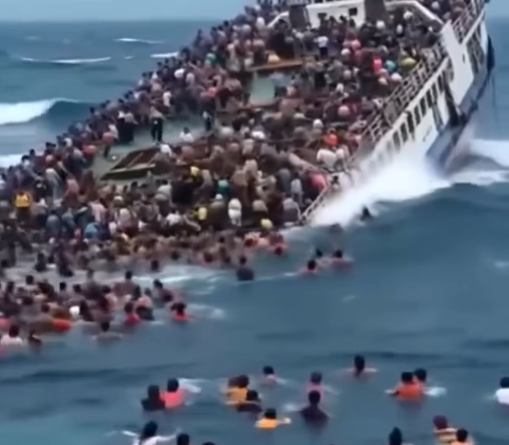
Breaking News: Tragic sinking of passenger ship… See more
The sea swallowed them in darkness, and much of the world barely noticed. Hundreds of lives were lost in a single night, reduced to numbers rather than names, their stories fading beneath the surface.
They had already escaped devastation—war in Syria, poverty in Pakistan, and hardship in Egypt. Each person carried hope: families sacrificing everything, young people promising to send help home, all searching for a chance at a different life.
Libya was never meant to be the end. It was a place of waiting, often marked by danger, exploitation, and fear. When the Adriana appeared, it was seen not as safe, but as the last possible opportunity.
What followed raised difficult questions. Some argue the disaster was not only a tragic ঘটনা but also shaped by policy decisions, delayed responses, and unclear responsibility among authorities.
In the aftermath, many victims remained unidentified, their lives summarized in brief reports or statistics. The scale of the loss made it harder for individual stories to be heard.
For observers, the event highlights ongoing debates about migration, border policies, and the responsibility of governments when lives are at risk at sea.
Remembering what happened means looking beyond numbers and recognizing the human lives involved, each with their own history, family, and hopes.
The tragedy remains a reminder of the stakes in these journeys—and of the importance of accountability, awareness, and compassion moving forward.