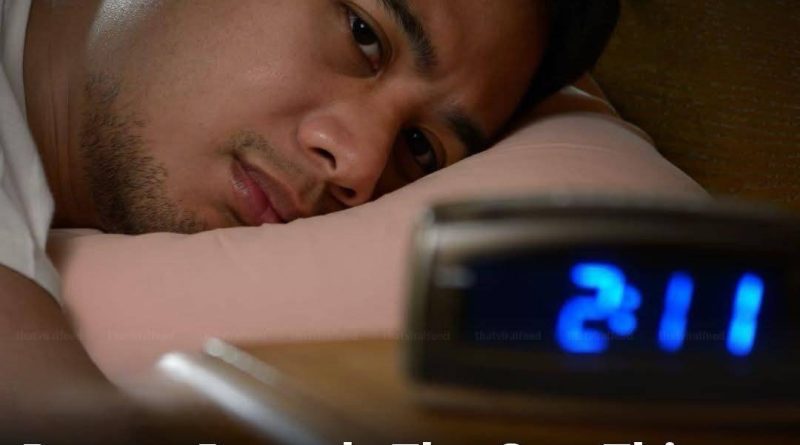
The Worst Mistake: Doctor Reveals the One Thing You Must Avoid Doing If You Wake Up During the Night
Picture this all-too-familiar scene that so many of us know intimately: You’re deep in the thick, comforting blanket of Stage 3 non-REM sleep—the phase where your body repairs tissues, consolidates memories, and restores energy at the deepest level. Your breathing is slow and steady, your muscles completely relaxed, your brain producing those slow, powerful delta waves that define truly restorative rest. Then, without warning, something nudges you awake. The room remains pitch black and silent, yet your consciousness snaps on like a light switch flipped in the wrong direction. This is what sleep scientists call a Middle-of-the-Night (MOTN) arousal—a premature flip of the brain’s internal “sleep switch” from off to on.
In that hazy, disoriented moment, most people do exactly the same thing: They reach over, fumble for their phone, or glance at the glowing digital numbers on the nightstand clock. The display stares back—perhaps 2:38 a.m., 3:12 a.m., or 4:05 a.m.—and in an instant, everything changes. A quiet awakening becomes an anxious battle.
Dr. Biquan Luo, widely regarded as one of the foremost experts in sleep technology and the CEO of LumosTech (a company dedicated to developing cutting-edge devices like intelligent light-therapy sleep masks that help realign circadian rhythms), has zeroed in on this single, almost universal habit as the primary saboteur of getting back to sleep. He calls it temporal monitoring—the automatic, almost compulsive act of checking the time during a nighttime awakening. According to Dr. Luo, this one behavior stands out as the worst mistake you can make when you wake up at night.
Why does something so innocent-looking cause such profound disruption? To answer that fully, we need to explore the full cascade of events it sets off—spanning neurochemistry, hormonal responses, body temperature regulation, light physiology, behavioral conditioning, evolutionary sleep patterns, psychological acceptance, and environmental factors. Only by understanding the complete picture can we appreciate just how devastating that quick clock glance really is—and more importantly, what to do instead.
I. The Neuro-Psychological Devastation Triggered by Looking at the Clock
Checking the time at 3 a.m. is never just gathering neutral data. It is an aggressive cognitive and emotional intervention that instantly dismantles the fragile neurochemical state required for sleep to resume.
1. Activation of the HPA Axis and the Chemistry of Sudden Anxiety
For sleep to return, the parasympathetic nervous system—commonly known as the “rest and digest” branch—must remain dominant. This system slows heart rate, lowers blood pressure, reduces metabolic demand, and promotes cellular repair. The opposing force, the sympathetic “fight-or-flight” system, must stay suppressed.
The second your eyes focus on those glowing numbers and your brain registers how few hours remain until morning, executive brain regions (primarily the prefrontal cortex) begin performing rapid “sleep debt arithmetic.” You subtract: current time minus alarm time equals remaining sleep opportunity. If the result feels dangerously low—perhaps only 3.5 hours, 2 hours and 45 minutes, or even less—the amygdala (your brain’s rapid-response fear and emotion center) immediately classifies this as a threat.
It’s not an exaggeration to say the brain treats insufficient upcoming sleep as a survival-level danger, similar to anticipating hunger, exposure, or social rejection in ancestral environments. This perceived threat activates the Hypothalamic-Pituitary-Adrenal (HPA) axis, the body’s central command center for stress responses.
Here’s the molecular sequence that unfolds:
The hypothalamus releases corticotropin-releasing hormone (CRH).
CRH stimulates the pituitary gland to secrete adrenocorticotropic hormone (ACTH).
ACTH travels through the bloodstream to the adrenal glands sitting atop the kidneys.
The adrenals then pump out cortisol (the main glucocorticoid) and a smaller but significant amount of adrenaline (epinephrine).
Cortisol’s effects are powerfully anti-sleep:
It raises blood glucose levels rapidly, providing fast energy for action.
It increases alertness by enhancing glutamate signaling in the brain.
It suppresses non-emergency systems, including immune function and—critically—deep sleep processes.
Normally, cortisol follows a daily rhythm: bottoming out around midnight to 2 a.m., then gradually rising to peak shortly after wake-up (the cortisol awakening response). A 3 a.m. clock check hijacks this rhythm, causing an unnatural early spike that floods the system with wake-promoting signals and actively blocks the return of sleep drive.
Adrenaline adds physical urgency:
Heart rate accelerates.
Blood vessels constrict, raising blood pressure.
Core body temperature rises even fractionally (0.5–1°C is enough to matter).
Deep sleep requires a core body temperature drop of roughly 1–2°C (2–4°F) from daytime levels. This drop helps shift the brain into slow-wave activity. By elevating temperature through stress hormones, clock checking literally heats the “engine” and prevents cooling, keeping you physiologically locked in a lighter, more vigilant state.
Then comes cognitive hyperarousal—the notorious racing mind. Once the HPA axis is engaged, thoughts spiral: “I only have three hours left—I’ll be a zombie tomorrow.” “My presentation/meeting/exam is at 9 a.m.—how can I possibly perform?” “If this keeps happening, my health/career/relationships will suffer.” Each worry feeds back into the amygdala, sustaining the stress loop. Neurologically, this is the same vigilance circuitry activated when facing real danger in the wild. The brain cannot distinguish between “predator outside the cave” and “not enough sleep before tomorrow’s responsibilities”—both get treated as emergencies requiring wakefulness.
This creates a vicious, self-reinforcing cycle: anxiety prevents relaxation → lack of relaxation prolongs wakefulness → prolonged wakefulness increases anxiety about the consequences. Breaking free requires interrupting the cycle at its root—avoiding the initial trigger (the clock).
2. The Photobiological Damage: Blue Light’s Direct Assault on Melatonin
When the clock check happens via smartphone (the most common method today), a second, entirely separate destructive pathway activates: blue-light-induced circadian disruption.
Screens emit short-wavelength blue light peaking around 450–490 nanometers. This wavelength is uniquely effective at influencing non-visual photoreception.
The retina contains a small population of intrinsically photosensitive retinal ganglion cells (ipRGCs) that express melanopsin, a photopigment exquisitely sensitive to blue light. These cells do not contribute to conscious vision; their only job is to monitor environmental brightness and report to the brain’s circadian center.
When blue light strikes melanopsin—even for just seconds—the ipRGCs fire strongly and relay an urgent message to the suprachiasmatic nucleus (SCN), the suprachiasmatic nucleus located in the hypothalamus and functioning as the master body clock.
The SCN responds as though sunrise is imminent. It immediately inhibits the pineal gland’s secretion of melatonin—the hormone nicknamed the “vampire hormone” or “hormone of darkness” because its production skyrockets only after prolonged darkness and peaks between 2–4 a.m.
With melatonin suppressed, the biological anchor for nighttime is lost. The circadian system shifts toward a “day” state: alertness increases, core temperature begins to stabilize or rise instead of fall, and the pressure to sleep weakens. This forced phase advance creates a form of acute social jetlag or circadian misalignment, where your internal clock is pushed earlier than your desired schedule.
The effect is dose-dependent but surprisingly potent even from brief exposures. Research shows melatonin suppression of 20–70% from exposures as short as 5–30 seconds of bright screen light at night. Repeated glances (common when people check, worry, check again 10 minutes later) compound the suppression, delaying the natural rebound of melatonin and prolonging wakefulness by 30–90 minutes or more per incident.
Even non-phone clocks with blue-ish LEDs or backlit displays can contribute subtly, though the smartphone’s high-intensity, close-range emission makes it by far the worst offender.
II. When Staying in Bed Becomes the Enemy: Conditioned Arousal and the 15-Minute Rule
If wakefulness stretches past roughly 15 minutes, a dangerous psychological shift occurs: the bed stops being a safe haven for sleep and starts becoming a conditioned trigger for frustration, anxiety, and alertness.
This phenomenon is explained by classical (Pavlovian) conditioning. The brain forms powerful associations based on repeated pairings. When you repeatedly lie in bed feeling stressed, tossing, worrying, checking the clock, and failing to sleep, your brain begins linking the physical cues of the bedroom—the mattress, pillows, sheets, darkness—with the emotional state of arousal and distress.
Leading sleep psychologist Luis F. Buenaver describes this as conditioned arousal, one of the most stubborn maintainers of chronic insomnia. Once established, simply getting into bed can trigger increased heart rate, racing thoughts, and hypervigilance—even on nights when you’re exhausted.
The antidote is stimulus control therapy (SCT), the behavioral cornerstone of Cognitive Behavioral Therapy for Insomnia (CBT-I). SCT, pioneered by Richard Bootzin in the 1970s, works by rigorously rebuilding the bed’s exclusivity as a cue exclusively for sleep (and sex/intimacy). All other activities—especially wakeful frustration—are banished.
The central rule is simple but powerful: If you’re not asleep within 15–20 minutes of lying down (or after waking up at night), you must get out of bed immediately.
This is often called the 15-Minute Rule, though some protocols allow up to 20 minutes to account for natural variation. The key is consistency and decisiveness—no bargaining, no “just five more minutes.”
The Precise Reset Protocol: Step-by-Step
When the rule activates, follow this clinically precise sequence:
Immediate environmental change Get up without hesitation. Leave the bedroom completely. Go to a different room—a living room, kitchen table, hallway chair, or spare room. The goal is physical separation from sleep cues.
Strict light discipline Use only the dimmest possible illumination—ideally red or amber wavelengths (5–10 lux or less). Red light has minimal impact on melanopsin and ipRGCs. Avoid white, blue, or even standard warm bulbs. If reading, use a book light with a red filter.
Choose a low-cognitive-load, non-rewarding activity The aim is to occupy the brain’s default mode network (active during mind-wandering) without activating the task-positive network (involved in focused effort and reward).
Recommended: Read a physical book that’s moderately boring or technically dense—e.g., an old textbook on engineering, a historical reference volume, an instruction manual for household appliances, a dictionary, or a dry classic you’ve already read. The mild eye strain and cognitive processing encourage drowsiness without emotional engagement or dopamine release.
Strictly forbidden: Screens of any kind (phone, tablet, TV, laptop), social media, news, work email, planning tomorrow’s tasks, problem-solving, exciting novels, or anything that could spark interest, anxiety, or reward anticipation. These activities trigger dopamine, norepinephrine, and sustained alertness.
Monitor for genuine drowsiness—not just tiredness Do not return to bed until you experience unmistakable physiological signs of impending sleep: heavy, drooping eyelids; slowed breathing; a sinking, heavy feeling in the limbs; yawning; or micro-sleeps (brief head nods or lapses while sitting). This usually takes 20–60 minutes but can be shorter or longer. The key is waiting until sleep pressure is high enough that return to bed leads to rapid onset.
Repeat as necessary If you return to bed and still can’t sleep within another 15–20 minutes, get up again. Some nights require multiple cycles—this is normal and part of retraining.
This protocol is an investment in long-term sleep health. Each time you follow it, you weaken the conditioned link between bed and frustration while strengthening the link between bed and quick sleep onset. Most people notice meaningful improvements within 1–3 weeks, with sleep efficiency (percentage of time in bed actually asleep) climbing dramatically.
III. The Consistency Rule: Fixed Wake Time and Adenosine Pressure
One non-negotiable companion to the 15-minute rule is fixed wake time—rising at the exact same hour every morning, no matter how poorly (or well) you slept the night before.
This builds sleep pressure through the accumulation of adenosine, a molecule produced as a byproduct whenever neurons fire and use energy (ATP → ADP → adenosine). Throughout the day, adenosine steadily rises in the brain, binding to receptors and gradually increasing the biological drive to sleep. The longer you’ve been awake, the higher the adenosine level—and the stronger the sleep urge.
Sleep clears adenosine from the brain (primarily during slow-wave sleep). If you sleep poorly but then “sleep in” to compensate, you partially clear adenosine and reduce pressure for the next night—making it harder to fall asleep the following evening. By contrast, a fixed wake time (even after a terrible night) ensures adenosine continues building from a consistent baseline, creating reliable pressure for the next bedtime.
This is exactly how caffeine works in reverse: it blocks adenosine receptors, artificially reducing perceived sleep pressure. Avoiding caffeine after noon (or earlier for sensitive individuals) preserves the natural buildup.
IV. Understanding Midnight Wake-Ups Through an Evolutionary Lens
Frequent 2–4 a.m. awakenings often feel like personal failure, but historical and anthropological evidence suggests they may partly reflect our species’ older sleep architecture.
Before widespread artificial lighting, clocks, and rigid industrial schedules, humans commonly practiced biphasic or segmented sleep. People typically went to bed shortly after sunset, slept for 3–5 hours (“first sleep”), awoke naturally for 1–3 hours of calm wakefulness, then returned for another 3–5 hours (“second sleep”) until dawn.
This pattern appears consistently in pre-19th-century sources: medieval medical texts, 16th–18th-century diaries, literature (including references in Shakespeare and Chaucer), church records mentioning people “lying awake between sleeps,” and even legal testimonies describing nighttime activities during the “watch” period between sleeps.
The intervening wakeful period was often quiet and reflective—prayer, journaling, light chores, intimacy, conversation with bedmates, or simply lying in the dark thinking. It wasn’t viewed as insomnia but as a normal part of the night.
The shift to monophasic sleep (one unbroken 7–9 hour block) emerged with street lighting, the Industrial Revolution, factory shifts, and especially Thomas Edison’s affordable light bulb in the late 1800s. The 9-to-5 workday and electric illumination compressed sleep into a single consolidated period, making any mid-night awakening seem abnormal or pathological.
Modern expectations amplify the problem: We demand seamless, efficient sleep because our schedules demand it. When a natural awakening occurs—often coinciding with the core body temperature nadir and lowest circadian alertness—checking the clock and panicking transforms a potentially benign pause into a full-blown stress event. Simply understanding that segmented sleep was once the norm can dramatically lower anxiety: “This isn’t broken sleep; it might be ancestral biology re-emerging.” That cognitive reframe alone reduces HPA activation and shortens wake time.
V. The Paradox of Acceptance: Stop Fighting to Win Sleep Back
The sleeping brain operates on a strange paradox: the harder you try to force sleep, the more it eludes you. This is explained by Ironic Process Theory (Daniel Wegner’s “white bear” experiment): instructing someone not to think of a white bear makes the bear image appear constantly. Similarly, commanding yourself “I must fall asleep right now” or “Don’t stay awake” strengthens the very thought you’re trying to banish.
Stanford sleep expert Dr. Fiona Barwick highlights psychological acceptance as the missing piece in many insomnia cases. Instead of battling wakefulness (“This is unacceptable—I have to sleep!”), you practice non-judgmental acknowledgment: “Right now, in this moment, I am awake. That’s okay. It won’t last forever.”
Getting out of bed to read a dull book embodies this acceptance in action. You’re not surrendering defeat—you’re strategically removing yourself from the struggle so natural processes (adenosine buildup, declining core temperature, melatonin rebound in darkness) can operate undisturbed. By accepting the current state without resistance, you deactivate the HPA axis, reduce cortisol and adrenaline, and paradoxically accelerate the return of drowsiness.
Many patients describe a tipping point: after several nights of consistent acceptance and reset, the fear of awakenings fades. When fear diminishes, the physiological arousal it once caused also fades, creating a virtuous cycle where awakenings become shorter and less frequent.
VI. Building the Ideal Sleep Cave: Environmental Foundations
While handling awakenings is crucial, preventing frequent MOTN arousals starts with optimizing the bedroom to match the conditions our brains evolved under—cool, completely dark, quiet.
Temperature control — Target 16–19°C (60–67°F). Core body temperature must fall to initiate and maintain deep sleep. Overly warm rooms (above 20–21°C) impair heat loss, resulting in lighter, more fragmented sleep. Use breathable bedding, a fan, or slightly lower thermostat at night.
Absolute darkness — Even tiny light sources (clock LEDs, power strips, hallway seepage, streetlights) penetrate closed eyelids and subtly activate the SCN. Blackout curtains, blackout blinds, electrical tape over LEDs, or a contoured sleep mask eliminate stray light completely.
Noise buffering — Sudden or inconsistent sounds trigger micro-arousals. A white noise machine, fan, air purifier, or quality earplugs create consistent masking sound that blends disruptions into the background.
Combine these with daytime habits—no caffeine past early afternoon, regular exercise (but not within 3 hours of bed), morning sunlight exposure to anchor the circadian rhythm, and a relaxing pre-bed routine (dim lights, no screens 60–90 minutes before bed).
VII. Clinical Hierarchy: Layered, Evidence-Based Solutions
Sleep specialists approach insomnia with a stepped hierarchy, starting with the safest, most sustainable interventions:
Tier 1: Optimized sleep hygiene — Consistent timing, cool/dark/quiet bedroom, daytime light exposure, no late stimulants or heavy meals.
Tier 2: Stimulus control + 15-minute rule — The primary behavioral retraining tool for breaking conditioned arousal.
Tier 3: Comprehensive CBT-I — Delivered by a trained therapist, this includes cognitive restructuring of catastrophic sleep beliefs, relaxation techniques (e.g., progressive muscle relaxation, diaphragmatic breathing), and sometimes sleep restriction to consolidate sleep.
Tier 4: Medical evaluation/intervention — Only after behavioral approaches are maximized, for underlying disorders like obstructive sleep apnea (treated with CPAP), restless legs syndrome, chronic pain, depression/anxiety, or other medical contributors.
The majority of MOTN issues resolve at tiers 1–2 with diligent application.
VIII. Conclusion: Surrender Is the True Guardian of Sleep
Falling back asleep after a nighttime awakening is never about willpower or forcing the issue—it’s about total, deliberate surrender to your biology’s requirements.
The worst mistake—the one that turns minutes of wakefulness into hours—is temporal monitoring: checking the clock and letting it trigger anxiety, stress hormones, temperature rise, and melatonin suppression.
The best strategy is the opposite: refuse the clock entirely, shield from blue light, get out of bed promptly when the 15-minute threshold passes, engage only in dim, boring activities until true drowsiness arrives, maintain fixed wake times to build adenosine pressure, accept wakefulness without judgment, and keep the bedroom a cool, dark, quiet cave.
Each time you resist glancing at the time, you protect the delicate balance of hormones, temperature, light cues, and neural associations needed for deep delta-wave sleep. Over weeks and months, this single habit change rewires your relationship with the night. Awakenings become brief, neutral events rather than catastrophes. Sleep becomes more continuous, more restorative, and more reliable—leading to sharper days, steadier energy, better mood, and greater overall resilience.
Stop trying to control the night with a clock. Give your body darkness, mental space, and permission to find its own way back. That’s when the deep, healing currents of restorative sleep return most powerfully.