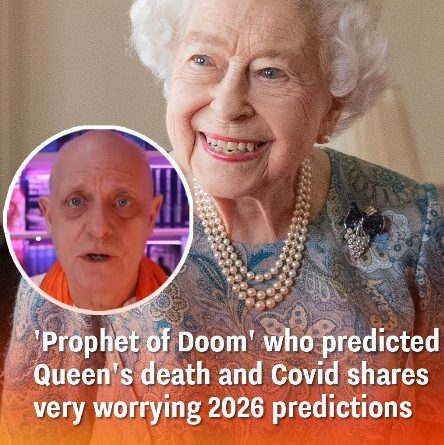
‘Prophet of Doom’ who predicted Queen’s death and Covid shares very worrying 2026 predictions
Craig Hamilton-Parker, often referred to by followers as the “Prophet of Doom,” has shared his predictions for the coming year — and they paint a cautious picture of what may lie ahead. Known online for presenting himself as a clairvoyant, he has built an audience through bold forecasts about global events.
Supporters say he previously claimed to foresee major developments, including the death of Queen Elizabeth II, the global COVID-19 pandemic, and health concerns involving King Charles III. These assertions have contributed to his growing visibility across social media platforms and video channels.
Hamilton-Parker describes his work as a blend of intuition, meditation, and traditional spiritual texts. He frequently collaborates with his wife, Jane, and says some of his insights are influenced by ancient Indian Nadi texts, which are believed by practitioners to contain recorded life paths and symbolic guidance.
In his latest outlook, he suggests the next year could bring continued geopolitical tension. He points to the possibility of new or escalating conflicts, warning that instability may remain a defining global theme rather than a short-term phase.
Environmental concerns also feature prominently in his predictions. He has spoken about extreme weather, climate anxiety, and the growing pressure on governments to respond to ecological challenges that are already affecting communities worldwide.
Political change is another theme he highlights. Hamilton-Parker suggests leadership transitions, unexpected policy shifts, and public unrest could shape headlines, contributing to a sense of uncertainty across multiple regions.
Skeptics emphasize that psychic predictions are not supported by scientific evidence and should be viewed as opinion or entertainment rather than verified forecasts. Many forecasts use broad themes that can apply to a wide range of possible outcomes.
Still, interest in predictions remains strong, particularly during periods of global uncertainty. Whether viewed as insight, speculation, or storytelling, forecasts like these reflect a common human desire to understand what the future might hold — even when the outlook appears challenging.